Practical guide
How to Keep an AI Image Series Visually Consistent—And Where Text Prompts Stop Helping
Create a more coherent text-to-image series by locking visual grammar while staying honest about identity and detail limitations.
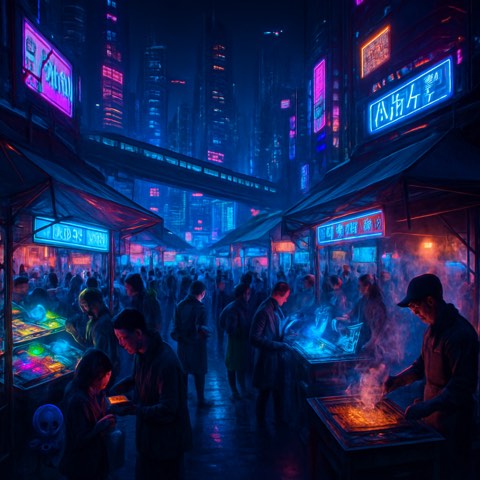
The central idea
Text-only consistency comes from repeating a small visual grammar: palette relationships, light direction, contrast, camera distance, material treatment, and composition. It can create family resemblance, but it cannot guarantee the same person, object, logo, or layout.
A repeatable workflow
Write a style block
Capture five to seven observable traits instead of naming only an artist, trend, or broad medium.
Separate the scene
Keep style language in a reusable block and change the subject/action in a different block.
Generate a calibration set
Test several subjects before committing so the style does not work only for one scene.
Document exceptions
Record which scene types break the grammar and when a reference-based tool is required.
Worked example
A series can repeat muted teal shadows, warm practical highlights, shallow depth, eye-level framing, weathered metal, and restrained film grain. Those traits can unify a market, workshop, and transit scene even though specific characters will drift.
Review checklist
- Style traits are visually observable
- Scene and style blocks are separate
- The grammar works across subjects
- Identity drift is not hidden
Limitations
- Text-only prompts cannot lock an exact character or SKU
- Artist-name imitation raises ethical and legal questions