Practical guide
Why AI Product Images Drift—and When You Must Keep the Real Product Photo
Recognize label, proportion, material, color, accessory, and feature drift before a beautiful AI image misrepresents the product.
The central idea
Product drift is not a cosmetic defect when customers rely on the image. Any change to shape, controls, material, color, label, included accessory, quantity, fit, or performance implication can become a false representation.
A repeatable workflow
Create an accuracy sheet
List the product traits a customer could reasonably rely on before generating any concept.
Classify the image job
Separate internal moodboard, campaign concept, illustrative background, composite, and customer-facing product evidence.
Inspect systematic drift
Compare shape, proportions, interfaces, labels, materials, colors, quantities, accessories, and implied use.
Choose the right medium
Use real photography, controlled 3D, or compositing whenever exact identity affects purchase or safety.
Worked example
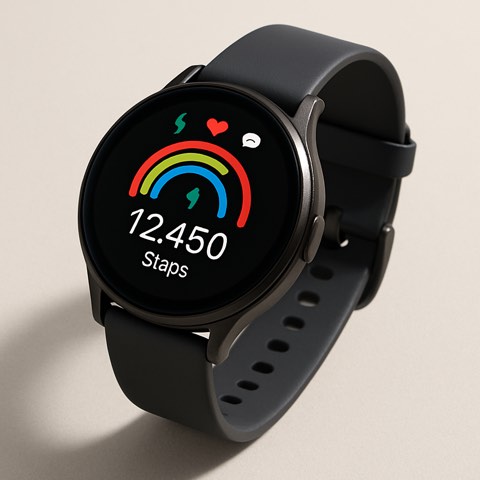
A generated smartwatch may invent sensors, change button placement, alter screen bezels, and show a health reading the product never provides. That image can inspire campaign lighting, but it should not become a product listing or feature ad.
Review checklist
- Accuracy traits are written first
- The image job has a risk level
- Drift is checked systematically
- Exact work uses an exact medium
Limitations
- Attractive outputs can make inaccuracies harder to notice
- Text prompting cannot verify real-world product truth